The Rise of the Home Gym: How to Design a Space for Movement, Mindset and Modern Living
Not so long ago, a home gym conjured images of a dusty treadmill shoved into a spare room, used enthusiastically for three weeks and then quietly abandoned.
But today, the conversation has shifted. Home gyms are no longer about bulky machines or extreme fitness goals – they’re about wellbeing, flexibility, privacy and designing homes that genuinely support how we want to live.
As an interior designer, I’m seeing more and more clients ask the same question:
“Could we fit some kind of gym space into the house?”
And the answer is almost always yes – with thoughtful planning, the right expectations, and a design-led approach to home gym design.
So why are home gyms on the rise?
Photos of: Sweet Yoga Justine, Eduardo Cano, Karola G
Exercise, Self-Care and the Shift Towards Long-Term Wellbeing
We’re more aware than ever that looking after ourselves isn’t a luxury – it’s a necessity. Gen Z (born 1997–2012) are forcing a generational shift, prioritising wellness and activity over more traditional social habits. That awareness is filtering outwards.
Gen X-ers, meanwhile, are on a mission in mid-life to make sure they make up for lost time – and many of us are actively looking for ways to improve how we feel, move and function day to day.
Over the past few years, there’s been a clear shift in how we view health and self-care. Exercise is no longer framed purely around aesthetics or performance, but around energy, mental health, mobility, longevity and resilience. We understand that consistent, manageable movement plays a huge role in how we feel.
Crucially, self-care has also become personal. Not everyone thrives in busy gyms, rigid class schedules or long commutes just to fit in a workout. For many homeowners – particularly women juggling work, family and home life – convenience matters.
A home gym removes friction:
No travel time
No waiting for equipment
No feeling self-conscious
No fixed timetable
Instead, movement becomes something you can slot into your day naturally – ten minutes here, half an hour there – which is often what makes habits stick long-term.

Photo credit: Kami Harris
Why Home Gyms Are on the Rise
From a design perspective, the rise of the home gym isn’t surprising at all. Our homes are now expected to do much more than ever before. They’re not just places to relax – they’re workspaces, social hubs, sanctuaries and increasingly, wellbeing spaces.
Some of the key reasons I’m seeing clients invest in home gym design include:
A Desire for Flexibility
Life is busy. Having a dedicated or semi-dedicated gym space at home makes it far easier to prioritise movement without rearranging your entire day. You can roll out of bed before the kids wake up, get a workout in, and feel like you’re already winning at life before the household fully starts.
Making Better Use of Space
Spare rooms, garages, underused reception rooms or garden buildings are being reimagined as purposeful spaces rather than storage overflow. Home offices became a necessity during the Covid years – and exercising from home followed closely behind (along with that sudden surge in weights and home gym equipment sales).
A Long-Term View of the Home
More and more homeowners are thinking holistically about how their home supports them now and in the future – including strength, balance and mobility as we age.
Higher Aesthetic Expectations
Today’s home gym doesn’t need to feel clinical or industrial. Clients want spaces that feel calm, considered and aligned with the rest of their home.
In short, the modern home gym is less about “fitness equipment” and more about intentional living – supported by clever storage, flexible layouts and clean design.

Photo Credits with thanks to: Jala interior
How to Fit a Home Gym Into a Regular Home
One of the biggest misconceptions I hear is:
“We don’t have space for a home gym.”
In reality, most homes can accommodate some form of workout space – it’s simply about scale and intention.
Here are some of the ways I regularly help clients integrate home gyms into everyday homes:
The Multi-Functional Room
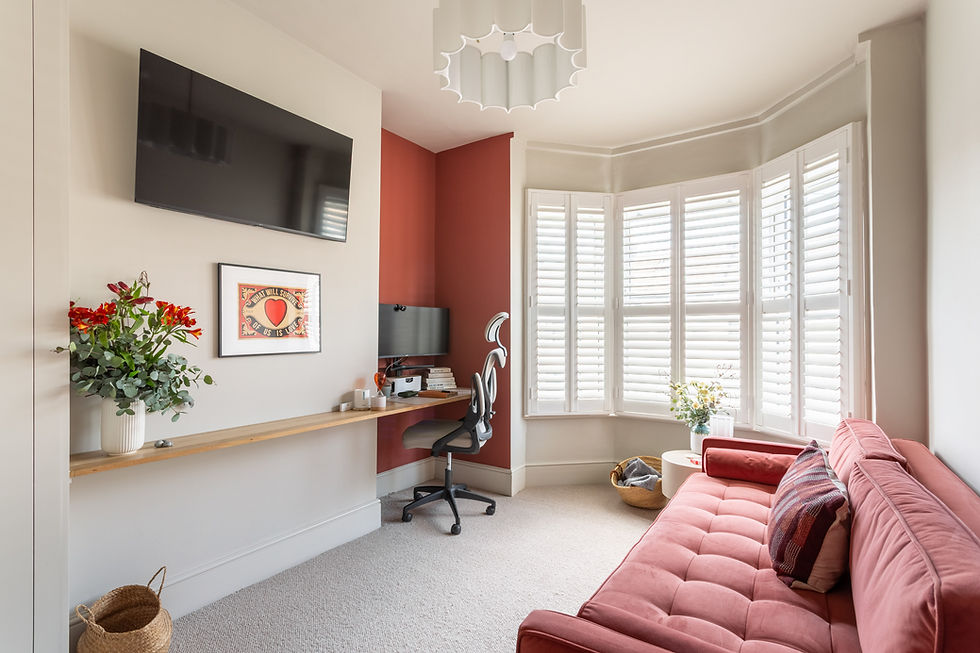
A guest bedroom that doubles as a yoga or Pilates space. A snug with discreet storage for weights. A playroom that can transform once children are older. Designing flexibility in from the outset is key.
The Spare Corner
Not every home gym needs four walls. A quiet corner of a bedroom, landing or living space can work beautifully for stretching, strength work or Peloton-style setups.
The Garage or Outbuilding
Garages, garden rooms and converted sheds are ideal for more equipment-heavy home gyms and work particularly well when insulated, heated and thoughtfully designed.
The “Wellbeing Room”
Some clients now prefer not to label the space a gym at all. Instead, it becomes a room for movement, calm and restoration – accommodating yoga, light weights, meditation and relaxation.
The takeaway? A home gym doesn’t need to dominate your home – it should fit seamlessly into it.
Photo Credits with thanks to: Margaret Young and TheMegaMom
How to Design a Home Gym That You’ll Actually Use
This is where good interior design makes all the difference. A well-designed home gym is far more likely to be used, enjoyed and maintained long-term.
Flooring for Home Gyms
One of the most important – and often overlooked – elements of home gym design.
If you’re starting from scratch, consider how you’ll use the space:
Rubber flooring for durability and sound absorption (ideal for HIIT and higher-impact workouts)
Cork flooring for a warmer, more natural feel (perfect for yoga and Pilates)
Engineered wood with mats for lighter workouts and multi-functional spaces
The right flooring protects both your home and your body.
Light, Ventilation and Temperature Control
Natural light makes a huge difference to how inviting a home gym feels. Where possible, position the space near windows or glazed doors.
Ventilation is equally important. Opening windows, extractor fans or even air conditioning in more enclosed spaces can dramatically improve comfort.
Our climate shifts throughout the year, so this needs to be factored in early – overheating is one of the fastest ways to stop using a space altogether.
Mirrors (But Not Everywhere)
Mirrors are incredibly useful for checking form and reflecting light, but they don’t need to dominate every wall. A single, well-placed mirror is often enough – although a full mirrored wall can work beautifully where form and technique matter.
Storage Is Essential
Clutter kills motivation.
Built-in cupboards, concealed drawers or wall-mounted storage keep equipment out of sight when not in use – especially in multi-functional rooms.
Ask yourself:
Can this room look calm and tidy within 60 seconds of finishing a workout?
Acoustics and Sound
Whether it’s music, guided workouts or reducing impact noise, acoustics matter. Soft furnishings, wall panels or rugs in adjoining spaces can help absorb sound.
Designing a Home Gym That Feels Like Home
Finally, your home gym should feel like part of your home – not an afterthought.
Colour palettes, materials, lighting and finishes should link back to the rest of the house. When a space feels both beautiful and functional, it’s far more likely to be used consistently.

Photo Credits with thanks to: AdriannaNimes
Designing for How You Want to Live
The rise of the home gym isn’t about chasing fitness trends or recreating commercial gyms at home.
It’s about designing spaces that support real life – imperfect schedules, ever-changing priorities, evolving bodies and long-term wellbeing.
When we design homes around how we actually live (rather than how we think we should), they become more supportive, more enjoyable and ultimately more valuable.
If you’re considering how your home could better support your wellbeing – whether through a fully designed home gym or a simple space to move – thoughtful design can make all the difference.
Photo Credits with thanks to: Sophisticated Spaces, Aida Hazova, AirBnB
Thinking About a Home Gym in Your Own Home?
Whether you’re planning a renovation, rethinking how a room is used, or want your home to better support your wellbeing, thoughtful home gym design can transform how you live.

Photo Credits with thanks to: Amber Valetta
I help homeowners create practical, flexible and beautifully integrated spaces – including multi-functional home gyms that genuinely get used.
If you’d like to explore how a home gym or wellbeing space could work in your home, get in touch to book a free, informal chat about how I can help.


Comments