From Pinterest to Personal:
How to Turn Inspiration Into a Cohesive Design Vision
Here’s how to move from Pinterest overwhelm to a home that genuinely feels like you.

So you've saved the beautiful kitchen. Screenshot the calming bedroom. Pinned the perfect utility room with the unlacquered brass tap and handmade zellige tiles. And before long, your Pinterest boards are overflowing with inspiration… yet somehow your own home still feels unresolved.
One of the biggest misconceptions about interior design is that collecting beautiful images automatically leads to a beautiful home. But the reality is, great interiors are rarely created by copying one room exactly. They come from understanding why certain spaces resonate with you and translating that into something cohesive, personal, and liveable.
This is often where people feel stuck. They know what they like individually, but struggle to pull everything together in a way that feels intentional rather than disjointed.
And honestly? This is one of the most valuable parts of working with a designer. Turning scattered inspiration into a clear vision is less about “choosing nice things” and more about creating a home that flows emotionally, visually, and practically.
Credit: DEN LIFE interiors/Pinterest Unknown
Stop Looking at Individual Rooms in Isolation
One of the most common mistakes I see is designing room by room without considering the home as a whole.
A dark and moody living room might look stunning online, but if the rest of your home feels light, airy and coastal-inspired, it can suddenly feel disconnected. Equally, a beautifully minimalist kitchen can feel cold if it doesn’t relate to the warmth and personality elsewhere in the house.
The most sophisticated homes have a sense of continuity running through them. Not necessarily “matching” — but connected.
That connection might come from:
Repeating tones or materials
Similar shapes and silhouettes
Consistent flooring or ironmongery
A balanced approach to colour
A shared atmosphere or mood
Before making any decisions, zoom out and think about your home as one complete experience rather than a series of separate spaces.
Credit: DEN LIFE interiors/Pinterest Unkown
Instead of creating individual Pinterest boards for each room, create one master board titled something like:
“How I Want My Home to Feel.”
Then start noticing patterns:
Are you drawn to warmth or contrast?
Soft organic textures or sharper architectural lines?
Relaxed minimalism or layered richness?
Heritage details or contemporary simplicity?
You’ll often discover your real style is less about one specific look and more about an overall feeling. So for example with the grid of images above you could surmise that you want a home that feels warm , layered, mix of contemporary and vintage and pops of colourful character to bring life.

Identify the Common Thread
Most people think they have “lots of different styles,” but usually there’s an underlying consistency they haven’t spotted yet.
As a designer, this is one of the first things I look for when clients share inspiration. Rarely is it about copying exact furniture or colours. More often, it’s about identifying recurring themes.
For example:
Natural textures
Soft curves
Deep earthy colours
Architectural lighting
Calm tonal palettes
Layered neutrals
Vintage character mixed with modern simplicity
Once you recognise those threads, decision-making becomes dramatically easier.
Suddenly you stop asking:
“Do I like this?”
And start asking:
“Does this fit the vision we’re creating?”
That shift changes everything.
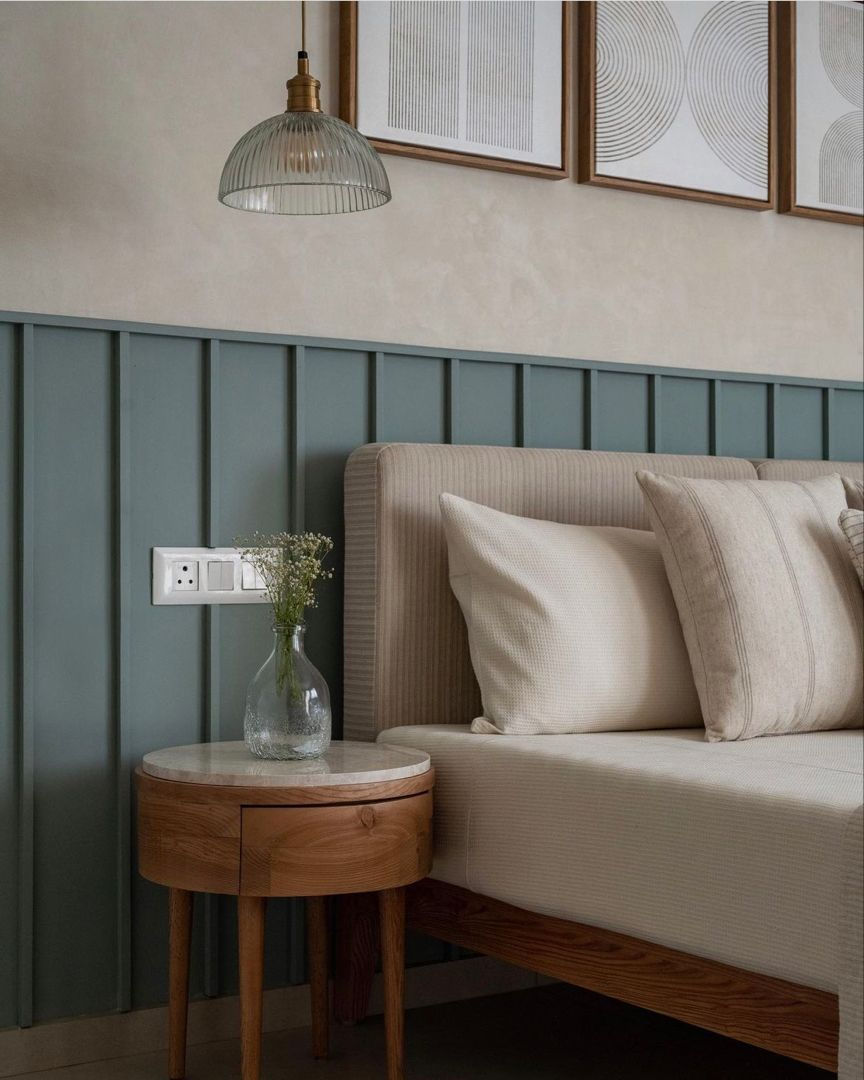
So looking at the last image we could identify that soft natural tones such as greens and off whites work well for you you like pattern but with a botanical look, that you are drawn to natural finishes such as woods. You like simplicity with smaller patterns but with layers of building colour.

Think Beyond Aesthetics
This is where design moves from “pretty” to genuinely transformative. Pinterest rarely shows how a room actually functions day-to-day. It doesn’t show the clutter behind the photo, the awkward lighting at night, or whether the layout genuinely works for family life.
A cohesive home needs to support your lifestyle just as much as it reflects your taste.
This means considering:
How you move through a space
What frustrates you currently
Where clutter naturally accumulates
How lighting changes throughout the day
What makes you feel calm, energised, or comfortable
Some of the most luxurious-feeling homes aren’t necessarily the most expensive — they’re simply the most thoughtfully planned.
Before choosing finishes or furniture, write down:
3 things you love about your current home
3 things that don’t work
How you want the space to feel
How you realistically need it to function
This creates a much stronger foundation for design decisions than aesthetics alone.
Build a Palette — Not a Collection of “Things”
One of the reasons professionally designed homes feel cohesive is because every element relates back to a considered palette. And by palette, I don’t just mean colour. I mean:
Materials
Textures
Finishes
Shapes
Wood tones
Metals
Fabrics
Contrast levels
Without this framework, it’s very easy for a home to start feeling visually noisy, even when every individual piece is beautiful on its own. A home should feel layered and interesting — not chaotic.
A Simple Designer Approach:
Try limiting yourself to:
2–3 core colours
1–2 wood tones
1 dominant metal finish
A consistent mix of textures
That doesn’t mean everything has to match perfectly. In fact, the best interiors don’t. But there should always be a sense of intentionality behind the choices.

Don’t Rush the “Finishing” Layer
This is often the missing piece. Many homes have the large furniture in place but still feel unfinished because they’re lacking the softer, quieter layers that bring warmth and personality.
Things like:
Lighting
Artwork
Textiles
Styling objects
Books
Natural materials
Window treatments
Vintage or collected pieces
These layers are what stop a home feeling like a showroom. They’re also what make it personal. The most interesting interiors rarely look as though they were bought all at once. They feel evolved, collected, and reflective of the people living there.
When styling a room, think in layers:
Foundation (flooring, walls, larger furniture)
Texture (rugs, fabrics, timber, stone)
Lighting (ambient, task, decorative)
Personality (art, objects, books, collected pieces)
It’s often these final layers that elevate a room from “nice” to truly memorable.

Remember That Pinterest Is Inspiration — Not Instruction
This might be the most important point of all. Some of the most beautiful homes don’t follow trends perfectly. They feel personal, comfortable, and authentic to the people living there.
Pinterest is brilliant for sparking ideas and helping you articulate what you’re drawn to. But your home should never feel like a carbon copy of someone else’s life.
The goal isn’t perfection. It’s cohesion. It’s atmosphere. It’s creating spaces that support your everyday routines while still feeling elevated and inspiring.
And that’s where thoughtful design makes all the difference.

A cohesive home doesn’t happen by accident. It comes from stepping back, understanding the bigger picture, and making decisions with clarity rather than impulse.
The irony is that the most effortless-looking interiors are usually the most carefully considered.
Because good design isn’t about filling a home with beautiful things. It’s about creating connection — between spaces, materials, functionality, and ultimately the people living there.
And when that happens, your home stops feeling like a collection of rooms and starts feeling like your home in the truest sense.
If you are planning on any updates and need some support then do get in touch as I am getting booked up fast this end and would love to be able to help if I can.


Comments