How to Choose the Right Furniture for Your Home (Without Getting It Wrong)
- mydenlife
- Apr 1
- 6 min read
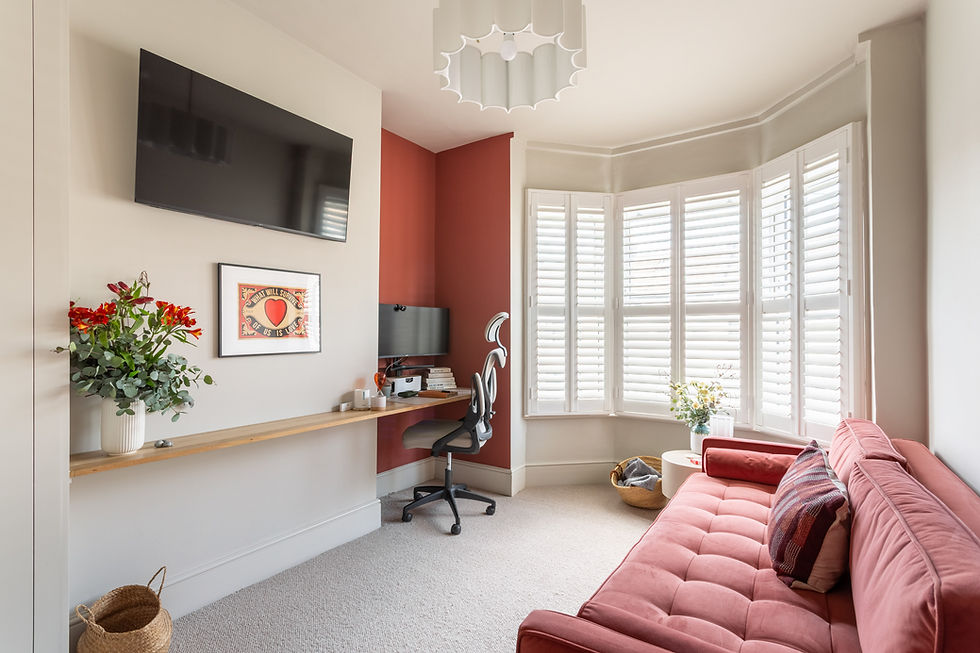
You know you want that lovely big, velvety, squishy chaise sofa in your home.
“I’ve found a sofa I love… I think I’ll start there.”
And it makes complete sense.
Furniture is the visible part of a room. It’s what we’re drawn to first. It’s what makes a space feel “done. But more often than not, this is where things start to unravel.
Because choosing the right furniture isn’t actually about just finding pieces you like. It’s about understanding how those pieces will work together, within your home, and for the way you live.
And that’s where it becomes a little more nuanced.
So if you’re at the stage of making decisions—or feeling slightly stuck—these are the things I always consider when guiding clients through it.

Before we even think about sofas or dining tables, I always come back to one question:
How do you actually live in your home?
Because the most beautiful room in the world won’t feel right if it doesn’t support your day-to-day life.
Do you need somewhere to properly relax at the end of the day?
Is this a space for hosting, or more for quiet evenings?
Are there children, pets, or both to consider?
Furniture should respond to real life, not an idealised version of it. In fact, good design always balances aesthetics with function—because both matter equally in a home that works long-term.
This is often the point where things shift—from “what do I like?” to “what do I need?”
And that’s a much more useful place to start.

This is the one that saves the most time, money, and frustration.
Plan the layout before you buy anything
It’s very tempting to buy furniture first and figure out where it goes afterwards. But without a clear layout, it’s almost impossible to get it right. And without measuring it's also not guaranteed it will even fit through the doors.
Furniture doesn’t exist in isolation—it shapes how you move through a space. So think about
Where are your natural walkways?
What’s the focal point of the room?
Will I block windows and natural light?
A well-considered layout creates flow. And without it, even the most beautiful pieces can feel awkward or out of place. Poor planning is one of the biggest reasons rooms feel “off,” even when everything in them is individually nice.
This is why I always test layouts first—often multiple options—before a single item is chosen.

When something feels “not quite right” in a room
Get the scale right
A sofa that’s slightly too large.
A rug that’s slightly too small.
A coffee table that doesn’t quite relate to the seating.
A cabinet that feels like it's floating in the space.
A pendant lampshade that's too small for the space and feels like it's lost
Individually, they might all be beautiful pieces. But together, they don’t quite sit comfortably. Scale and proportion are what make a space feel balanced—and they’re often overlooked. And that works in small and large rooms alike.
This is where experience comes in. Knowing how pieces should relate to:
the size of the room
the architecture
and each other
It’s subtle—but it makes all the difference between a room that feels considered and one that doesn’t quite land.

Not everything needs to be expensive. But some things do need to be right.
Invest where it matters
Key pieces—like sofas, dining tables, or anything you use every day—are worth investing in. Not just for how they look, but for how they wear over time. Higher-quality furniture tends to last longer and perform better in everyday use. And if it's a long term purchase then it's sustainable - which is what we all should really be thinking about these days when renovating. Think about the items that you use everyday - door handles and switches always come high on my list of invest in items too. Cost per wear comes to mind here... if you need something to go by!
The balance is knowing where to prioritise—and where you don’t need to. Because a well-designed home isn’t about spending more. It’s about spending intentionally.

This one is something worth thinking about early on in the process as it brings the personality to a space
Don’t try to match everything
Rooms that feel the most interesting—and the most personal—are never made up of matching sets.
Instead, they’re layered.
Different textures
Slightly varied tones
A mix of old and new
It's the items you have picked up on your travels, family heirlooms (or crazy air-clay ornaments made by your kids), it's the cute vase you couldn't resist buying. They all tell a story about you and your life and are an important part of the layering in a room. Without them where is the soul? When everything matches perfectly, it can feel flat. Almost like a showroom rather than a home. We don't live in the AI generated living rooms, we live in homes and they should feel beautiful, work hard but ultimately be part of you.

What works in a showroom… or on a screen… doesn’t always translate in real life. Either the colours feel off in your space or don't work together as you expected or the texture is all wrong to the touch.
Samples are risk free
Light changes everything. So do surrounding colours and materials.
This is why I always encourage clients to see samples in their own space before making final decisions.
Because a fabric, finish or colour can shift more than you expect once it’s actually in the room. From wallpaper and paint samples to sofa fabrics and curtains you can gather samples via retailers to sense check it works together tonally before committing.
Taking that extra time avoids costly mistakes—and means the final result feels exactly as it should.

This is often the missing piece of the cohesion puzzle. And as we tend to start with some furniture and not be throwing everything out to start as new (quite rightly) then this is a very common discussion with clients. I always ask what is staying and what is meaningful to clients before we start designing.
Think about how it all comes together—not just individual pieces
You can have a collection of beautiful furniture… and still feel like the room isn’t working. Because what matters most is how everything connects.
How the tones sit together
How the materials balance each other
How the space feels as a whole
One of the first things I look at is tone. Not just colour in the obvious sense—but the undertones running through a space. Are your woods warm or cool? Do your fabrics lean soft and muted, or rougher textured and more contrasting? Are your metals sitting comfortably together, or slightly competing?
It’s often these subtle differences that create a sense of harmony—or the opposite. When tones are aligned, a space feels calm and cohesive. When they’re not, it can feel slightly disjointed… even if you can’t immediately see why.
Then there’s materiality. A room needs a balance of textures to feel layered and inviting. Too many hard surfaces—and it can feel cold or flat. Too many soft ones—and it can lose structure. It’s about creating contrast in a considered way.
For example:
pairing a smooth stone surface with a softer fabric
balancing wood with something more refined like metal or glass
introducing a variety of texture through rugs, upholstery or wall finishes
These combinations are what give a space depth—without it feeling overdone.
This is something that’s often overlooked. But the shapes of your furniture play a huge role in how a space feels. If everything is very square and angular, it can feel quite rigid. If everything is soft and curved, it can lack definition. It’s usually the mix that works best. So if your main furniture is angular, you might consider a circular rug and mirror or you add in soft fabrics and soft rugs underfoot to contrast. A softer sofa paired with a more structured coffee table. A round side table to offset linear cabinetry. These small shifts help a room feel more natural and less “set up.”
Good design is less about adding more—and more about editing, refining, and bringing everything into balance.

Choosing furniture and fittings for your room should feel exciting. But it’s completely normal for it to feel overwhelming at times—especially when every decision feels like it carries weight. Because in reality, it does. Every item in your room is connected and when they work together then that is when it feels 'right'. And it shapes how your space feels, functions, and supports your everyday life.
The difference is having a clear plan—and someone guiding how it all comes together. So instead of second-guessing, you can move forward with confidence.
If you’re at that stage…
Sometimes a fresh perspective is all that’s needed to bring clarity. And that’s exactly where I can help.
You can get in touch for a no-obligation discovery call—and we can talk through your space together.

Happy Easter and see you in May. Sunshine please...



Comments